


QR Scanner, Read All Barcode
3.062.00 Reviews
App Specs
- Version
- 2.2.1
- Updated On
- License
- Free
- Downloads
- 1,000,000+
- Developer
- Techverse LTD
- Categories
- Tools
- Platform
- Android
Screenshots
 Analysis by AppCompare
I judge a QR scanner by how calmly it handles ordinary tasks, and by whether its information stays readable when I’m in a hurry or dealing with a less-than-ideal setting. QR Scanner, Read All Barcode is a free tools app from Techverse LTD. It combines code scanning with QR creation, which makes it more useful than a camera shortcut when I need to make a code as well as read one. Its audience rating is 3.7 from around 219 ratings, and it has passed 500,000 installs. That suggests a fair amount of use, but I’d still treat it as a practical utility rather than a polished, specialist accessibility tool.
Reading the screen and finding the main task
The first thing I noticed when I opened QR Scanner, Read All Barcode was its clean and intuitive interface. I’m not a tech wizard, but the layout made it easy to navigate. You’ve got everything you need right at your fingertips without any unnecessary clutter. This is a big win in my book because who wants to spend ages figuring out how to use a simple app?
That straightforward feel matters for more than convenience. A scanner is often opened for a single purpose, perhaps while standing in a queue or holding a product, so a clear route to the camera is more helpful than a screen crowded with competing options. I found the app’s basic premise easy to grasp: scan a code, review what it contains, or use the creation option when I want to share information. The age rating is Everyone, and the app is currently at version 1.2.4, but neither label should be mistaken for a promise that every user will find the screen comfortable. People who rely on larger text, stronger contrast, or screen-reader guidance should check the actual display on their own device before depending on it for a time-sensitive task.
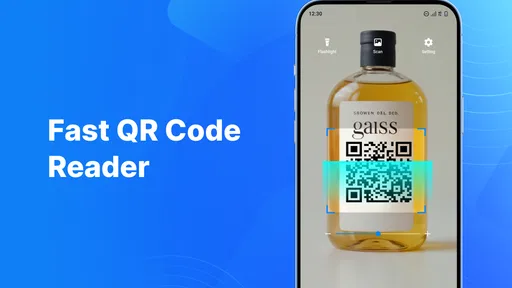
Setting it up was a breeze. After a quick download, I was up and running in no time. The app doesn’t require you to jump through hoops, which is refreshing. Just point your camera at a QR code or barcode, and boom, you're scanning. It’s fast, which is a relief because I don’t have the patience to wait around for an app to do its thing.
Scanning and creating codes in everyday use
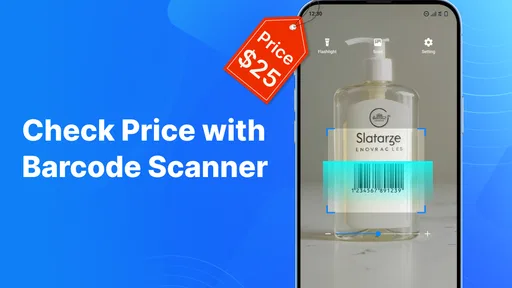
Now, let’s talk features. This app isn’t just a one-trick pony. Sure, it scans QR codes, but it handles barcodes too. That means you can use it for everything from checking product prices to accessing URLs or contact info. If you’re anything like me, you’ll appreciate having a multipurpose tool in your pocket.
The difference between a QR code and a familiar striped product barcode is useful in practice: a QR scanner that can also read barcodes gives me one place to try when I’m unsure which kind of code I’m looking at. Still, scanning a product barcode is not the same as getting a reliable price comparison. The app can read the code, but what happens next depends on the information it can present and the services available around that item. I wouldn’t make a purchase decision from a scan alone; I’d use it as a starting point and confirm the details on the product or retailer’s own page.
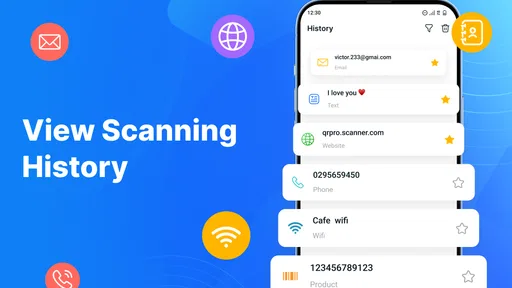
One feature I found particularly useful is the history log. Sometimes you scan codes and forget what they were for. With this app, you can easily look back at your scan history and revisit any links or info. It’s like having a personal assistant keeping track of all your scanned data.
Worth Reading Before You Choose

EA SPORTS FC Mobile 26 Is a Bigger Football Game, but It Takes Time

Flipboard Shows What News Apps Must Do Beyond the Feed

Switching to Android Auto Means Rethinking Your Driving Routine

Google Calendar Makes a Crowded Week Easier to Manage

Ludo King Makes the Most of the Minutes Between Plans

Baby Panda World Brings Quick Play to Modern Phones, but Its Game Library Feels Busy
That history is most helpful when I turn scanning into a small workflow rather than treating each code as disposable. For example, I might scan a label while browsing, then check the result again after I’ve put the item back on the shelf. A practical habit is to review a result before leaving the screen, especially if I expect to need it later; the history can help me find it, but it cannot tell me why I saved it. If I scan several similar packages, I’d make a note of the item or context elsewhere instead of assuming the list alone will make every entry obvious.
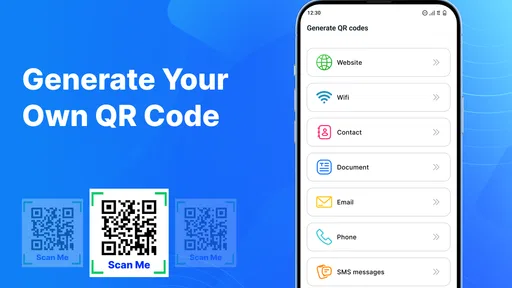
Another cool feature is the ability to generate your own QR codes. I mean, how cool is that? You can create codes for websites, texts, or even your Wi-Fi. It’s perfect for sharing info quickly without typing it all out.
Code creation has a different kind of usefulness from scanning. I can imagine making a QR code for a frequently shared web address or for guests who need Wi-Fi details, then letting them scan rather than spell out a long string. The trade-off is that a code is only as convenient as its placement and the person receiving it: a small printout, glare, or a camera-shy guest can make the supposedly quick exchange less smooth. I’d test a generated code with another device before printing it or sending it to a group, and I would avoid putting sensitive information into a code that will be displayed publicly.
Handling different bodies, senses, and settings
Performance-wise, I found the app to be reliable. It scanned codes quickly and accurately each time I used it. Plus, it works in low-light conditions, which is a nice touch. You know those times when you’re trying to scan a code in a dimly lit store? No worries here.
Even when a scanner works well, using it involves more than aiming a camera. Someone with limited hand control may find it tiring to hold a phone steady, and someone with low vision may need help aligning the lens with a small printed code. A useful adjustment is to bring the phone and code closer together, then move slowly until the camera can focus, rather than waving the device around. When the code is on a screen, reducing reflections by changing the angle can also help. These are general handling tips, not special modes in the app, and they won’t solve every physical or visual barrier.
There are other sensory considerations too. A code often leads to a web page or text that may be easier to read than the tiny printed notice beside it, but the scan itself still begins with locating the code and aiming a camera. In a noisy place, relying on spoken feedback from a phone may be awkward; in a bright setting, glare on the display can make a result hard to inspect. I’d treat the scanner as one route to information, not the only route. If the printed code is damaged, extremely small, or placed where a phone cannot be held steadily, asking for the address or details in plain text may be quicker and more dependable.
A realistic example is checking a QR code on a café table while carrying a bag. I’d set the bag down if possible, hold the phone with both hands, and scan before placing an order, rather than trying to balance everything at once. If the resulting page is crowded or uncomfortable to read, I’d ask staff for a printed menu or the information in another format. The app can reduce typing, but it cannot make the destination page accessible or guarantee that a venue has provided an alternative.
My everyday rule is to use the scan result as information to inspect, not as an instruction to follow automatically. A QR code can point to a page, and a barcode can identify an item, but the code itself does not tell me whether a destination is trustworthy or whether a product description is current. I look at the displayed result before opening it, especially when the code is on a flyer or a label I did not expect. That small pause is useful whether I’m scanning at home or out in public.
Where it fits—and where it falls short
The app is lightweight, so it doesn’t hog your device’s resources. This is a huge plus for anyone who, like me, has way too many apps and not enough storage space. It didn’t crash or lag during my testing, which is always a good sign.
Compared with using a phone’s built-in camera, a dedicated scanner earns its place when I want a separate scan history or a way to create QR codes in the same tool. If all I need is to open one QR link, the camera I already use may be simpler and avoid installing another app. If I need a barcode lookup tied to a particular shop or a detailed product database, a retailer’s own app or a specialist catalogue may be a better fit. This one’s appeal is the combination of basic scanning and code generation, not a promise to replace every service connected to a scanned item.
It also suits someone who shares links or Wi-Fi access now and then, but may be unnecessary for a person who scans only once in a while and is happy with the built-in camera. On the other hand, if I were organizing lots of codes for work, managing stock, or needing accessibility controls I could verify in advance, I would look for a purpose-built tool and test it against those exact needs. The app’s uncomplicated approach is an advantage for casual use, yet that same simplicity may leave power users wanting more control over how information is sorted or presented.
One point worth keeping in mind is that scanning depends on the camera and the code’s condition. A scratched label, a moving subject, poor focus, or a screen reflecting overhead lights can make a quick task slower. I would first clean the lens, steady the phone, and move the camera slightly rather than repeatedly tapping at the screen. For an awkward or damaged code, taking a photo and trying another method may be more sensible than assuming the app is at fault. A scanner is only as useful as the image it can read.
Because the app can open links, I also think it’s sensible to pause over a result before proceeding. A code’s appearance does not prove that its destination is safe. If a scan leads somewhere unexpected, I would close it and use a trusted source to find the information instead. That is not a special weakness of this app; it is a general caution with any QR reader. For shared devices, I’d also be mindful of what information I choose to encode, particularly when creating a code that others can scan.
On Android, the minimum operating system requirement is version 8.0, so people using an older device should check compatibility before planning to rely on it. The app is free, which makes it easy to try without paying for a scanner, but I’d still judge it by whether its actual interface works for my needs. Free is not a substitute for clear text, comfortable controls, or a scanning position I can manage.
My inclusive verdict
All in all, QR Scanner, Read All Barcode is a solid choice if you’re looking for a reliable scanning app. It’s simple, fast, and packed with features that make it more than just a scanner. Whether you’re a frequent shopper or just someone who likes to share links easily, this app has something for you.
For me, its strongest case is practical variety: scanning both common code types, revisiting past results, and creating QR codes without switching tools. That can help someone who shares information regularly or wants a straightforward backup for the built-in camera. The limits are just as important: the app cannot fix a badly printed code, make a destination page readable, or replace a specialist service when I need richer product information. Users with specific motor, visual, or screen-reader needs should try the complete scan-to-result process on their own phone, rather than judging accessibility from a tidy opening screen alone.
So, give it a shot! It's one of those apps you'll find yourself using more than you thought you would. And hey, it might just save you some time the next time you’re at the store trying to compare prices or check out a website on the go. Happy scanning!
Pros
- Fast and accurate scanning.
- Supports multiple barcode formats.
- User-friendly interface.
- No internet required for scanning.
- Minimal battery consumption.
Cons
- Contains ads in free version.
- Limited features without upgrade.
- Occasional false positives.
- Lacks advanced tools for business.
- No cloud backup for scanned data.
FAQs for QR Scanner, Read All Barcode
What types of barcodes can the QR Scanner, Read All Barcode app read?
The QR Scanner, Read All Barcode app is designed to read a wide variety of barcode formats, including QR codes, UPCs, EANs, Data Matrix, and more. This versatility makes it suitable for scanning products, URLs, contact information, and other data types, ensuring comprehensive usability for both personal and professional needs.
Is the QR Scanner app available for both Android and iOS devices?
Yes, the QR Scanner, Read All Barcode app is available for both Android and iOS platforms. You can download it from the Google Play Store for Android devices and the Apple App Store for iOS devices, ensuring accessibility for a wide range of users regardless of their preferred operating system.
Does the QR Scanner app require an internet connection to function?
The QR Scanner, Read All Barcode app does not require an internet connection to scan barcodes and QR codes. However, if the scanned code contains a URL or online content, an internet connection will be necessary to access the linked information. This design ensures offline functionality while providing online capabilities when needed.
Is the QR Scanner app safe to use in terms of privacy?
Yes, the QR Scanner, Read All Barcode app is designed with user privacy in mind. It does not store any personal data or scanned information on its servers. The app only accesses your camera to scan codes and does not collect or share personal information, ensuring a secure user experience.
Are there any in-app purchases or ads in the QR Scanner app?
The QR Scanner, Read All Barcode app offers a free version that includes ads. For users who prefer an ad-free experience, there is usually a premium version available for purchase. The premium version may also offer additional features, enhancing the app’s functionality and user experience.


